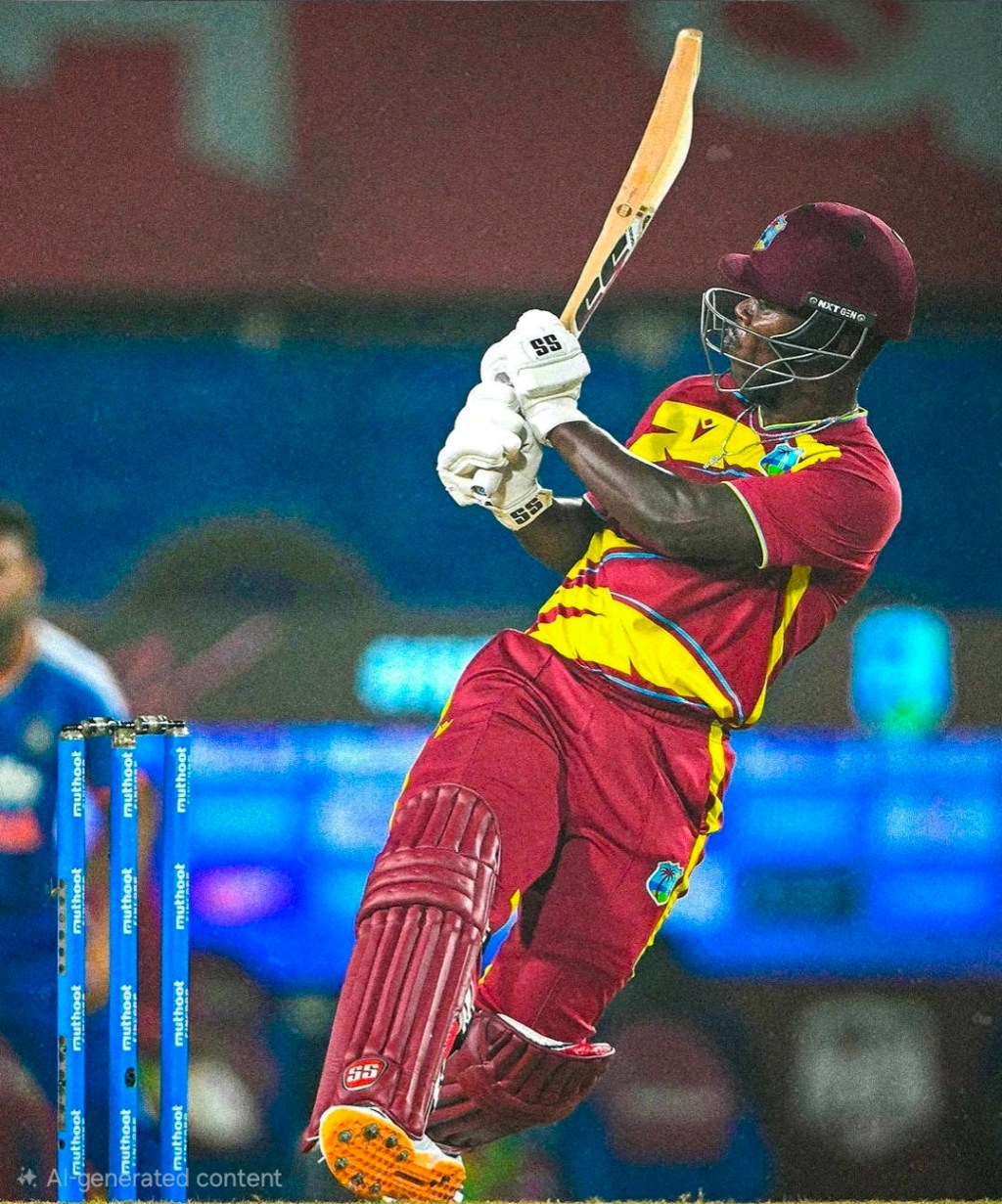
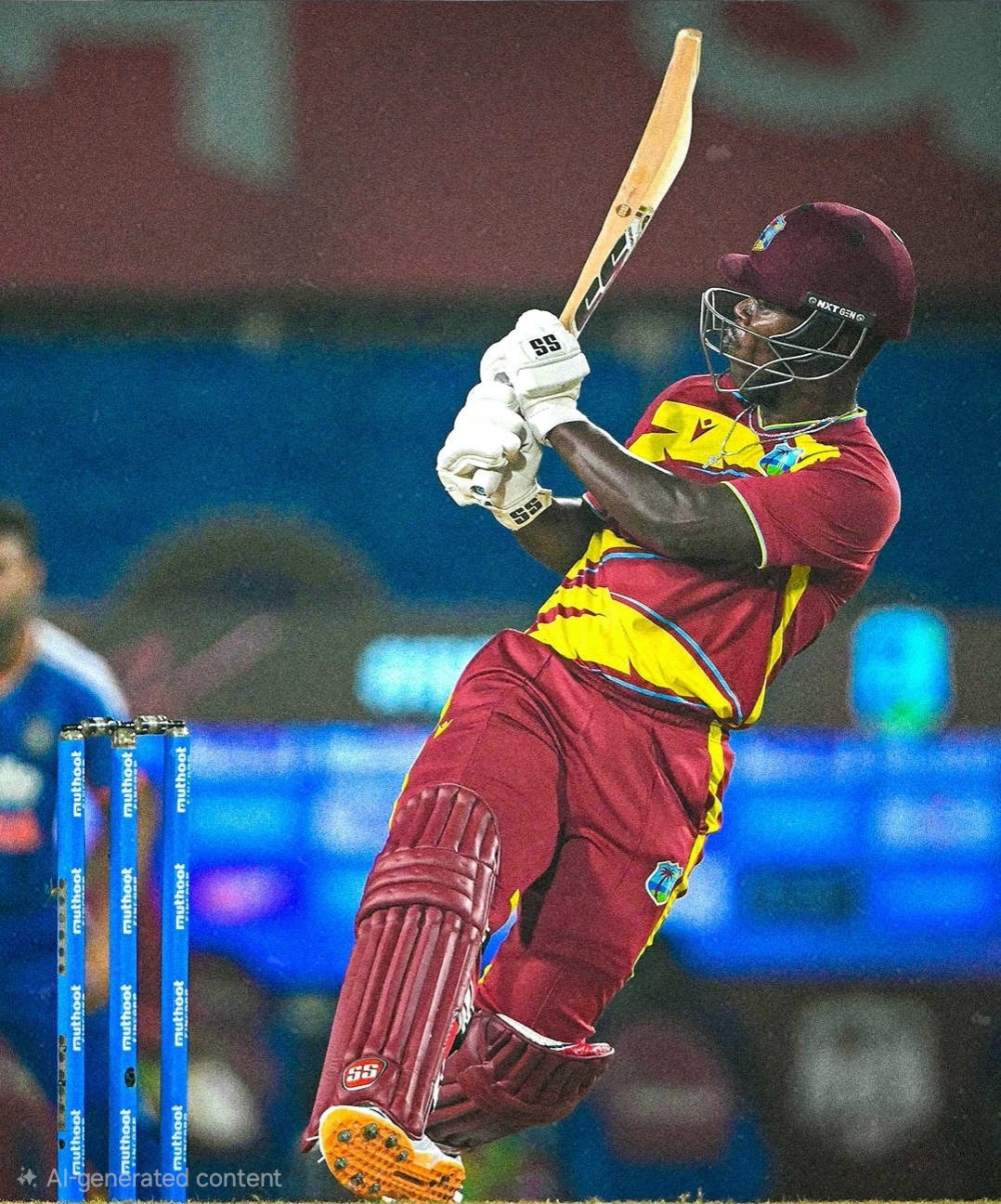
When we look at Sherfane Rutherford today, we see one of the most destructive power hitters in West Indies cricket, a batsman capable of changing the course of a T20 match in a matter of overs. What many cricket fans may not remember is that Rutherford began his senior career with Guyana as a promising bowling all-rounder, with figures suggesting that his bowling was potentially as valuable as his batting.
His transformation from a seam-bowling all-rounder to a specialist power hitter is an interesting story of talent, opportunity, and the influence of franchise cricket on the development of young West Indian cricketers.
The Early Years: A Promising Bowling All-Rounder
Rutherford made his first-class debut for Guyana in April 2017, at just 18 years old. A left-handed batsman who bowled right-arm medium-fast, he offered Guyana something valuable: a young cricketer capable of contributing significantly with both bat and ball.
In 17 first-class matches, Rutherford captured 33 wickets at an average of 23.72, with a strike rate of approximately 41 balls per wicket. His best innings figures of 6 for 32 demonstrated his ability to do considerably more than provide occasional support to the frontline bowlers.
These were impressive figures for a young all-rounder. He was taking almost two wickets per match, dismissing a batsman approximately every seven overs, and maintaining an economy rate of 3.46 runs per over.
His first-class bowling average of 23.72 compares favourably with the career averages of several established West Indian fast bowlers. Of course, the standard of domestic cricket differs from Test cricket, and 17 matches represent a relatively small sample. Nevertheless, the figures point to a young bowler with genuine potential.
At that stage, there was every reason to believe that Rutherford could develop into a valuable seam-bowling all-rounder for Guyana and possibly the West Indies.
Canada 2018: The Turning Point
The transformation began in earnest during the inaugural Global T20 Canada tournament in 2018.
Representing West Indies B, Rutherford produced an extraordinary innings against the Vancouver Knights on July 12, 2018. Chasing a target of 216, West Indies B found themselves struggling at 11 for 3.
What followed was an astonishing display of power hitting.
Rutherford smashed an unbeaten 134 from just 66 deliveries, striking 11 fours and 10 sixes. His innings carried West Indies B to victory and announced his arrival as one of the most exciting young batting talents in the Caribbean.
Interestingly, Rutherford also captured two wickets for 25 runs from four overs in that same match.
Here was a young cricketer producing an outstanding all-round performance, yet it was his batting that captured the headlines.
That innings changed the direction of his career.
Franchise teams were looking for explosive batsmen who could dominate the middle and closing overs of T20 matches. Rutherford had demonstrated that he possessed precisely those qualities.
The opportunities soon followed, and his career increasingly became centred on franchise cricket.
From All-Rounder to Specialist Batsman
As Rutherford moved into the world of international T20 leagues, his role began to change.
Teams were recruiting him primarily for his ability to hit boundaries, particularly sixes. His bowling, which had been an important part of his early development with Guyana, gradually became secondary.
Eventually, it almost disappeared from his game.
This was not necessarily because Rutherford had lost interest in bowling.
In interviews, he expressed a desire to continue bowling and acknowledged that he was not getting sufficient opportunities to do so. In 2022, he explained that he had bowled very little over the preceding three years, although he continued working on that aspect of his game.
The transformation was therefore not simply a matter of a young cricketer deciding to abandon bowling.
It was also a consequence of the role he was being asked to perform.
Franchise cricket had identified his greatest immediate commercial and competitive value as a power hitter. That became the skill around which his career developed.
His last first-class appearance came in 2019, further reducing his opportunities to bowl the longer spells that are important to the development of a seam bowler.
What Did West Indies Cricket Lose?
This raises an interesting question.
Had Rutherford continued developing both disciplines, what kind of cricketer might he have become?
The West Indies have struggled at various times to find seam-bowling all-rounders who can provide balance to the team. A player capable of contributing meaningful overs while batting aggressively in the middle order offers considerable flexibility in team selection.
Rutherford’s early first-class figures suggested that he possessed the foundation for such a role.
A bowling average of 23.72 and a strike rate of 41 balls per wicket are not figures that should be casually dismissed.
It is reasonable to ask whether more deliberate management of his development might have produced a different outcome.
Perhaps Rutherford could have become a genuine all-rounder, capable of batting in the middle order while providing ten or more overs in a 50-over match, or contributing regularly with the ball in T20 cricket.
We cannot know.
There is also the possibility that his bowling would not have remained as effective against stronger international batsmen. Success in domestic first-class cricket does not automatically translate into success at the highest level.
Nevertheless, the potential was there, and it was never fully tested.
The Influence of Franchise Cricket
Rutherford’s experience illustrates a wider issue facing West Indies cricket.
The rapid expansion of franchise T20 competitions has created tremendous financial opportunities for talented Caribbean cricketers. Young players can now earn substantial incomes by developing skills that are particularly valuable in the shortest format.
Power hitting is one of those skills.
The demand for batsmen capable of clearing the boundary consistently has encouraged greater specialization. Players are increasingly recruited to perform specific roles rather than to develop the full range of skills traditionally associated with all-rounders.
For Rutherford, that specialization has brought considerable success.
His batting has earned him opportunities in major franchise competitions and established him as a dangerous limited-overs player.
There is no reason to diminish those achievements.
The question is whether the development of one exceptional skill came at the expense of another that might also have served him and West Indies cricket well.
A Career That Could Have Taken Two Paths
It would be unfair to suggest that Rutherford made the wrong career choice.
Professional cricket is also a livelihood, and the financial opportunities available through franchise competitions are significant. Players must make decisions based on the opportunities before them.
Rutherford took advantage of his remarkable batting ability and built an international career around it.
Yet his story remains fascinating because of what his early bowling record tells us.
We are not discussing a batsman who occasionally delivered a few overs. We are discussing a young cricketer who captured 33 wickets in 17 first-class matches at an average below 24.
Those figures deserve recognition.
His remarkable innings in Canada in 2018 did more than announce the arrival of an explosive batsman. It effectively changed the trajectory of his cricketing career.
The bowling all-rounder who represented Guyana gradually became the power hitter sought after by franchise teams around the world.
Perhaps that transformation was inevitable, given the changing economics and demands of modern cricket.
Still, I cannot help wondering what Sherfane Rutherford might have become had his bowling received the same attention and opportunities as his batting.
We know what he has achieved as a power hitter.
What we will probably never know is just how good an all-rounder he might have been.


Leave a Reply